TASSTA Announces the Official Launch of TASSTA France
TASSTA Announces the Official Launch of TASSTA France
TASSTA today announced the official launch of TASSTA France, extending its presence into the French market.
TASSTA France will operate from a new office in Paris and serve as the company’s direct point of contact for public safety agencies, transport operators, utilities and enterprise organizations across the country. Beyond push-to-talk, TASSTA’s platform brings communication, coordination and operational tools, including push-to-video, messaging and data, GPS and mapping, lone worker protection, guard tour and patrol management, and drone and CCTV integration, into one secure environment for control rooms and field teams.
Leading TASSTA France is Dounia Daoud, who brings more than 15 years of experience in the technology and telecommunications sectors. In her role, Dounia is responsible for TASSTA’s business development activities in France, building relationships with customers and partners and supporting organizations through the adoption of mission-critical communication technology.
The TASSTA team will also be present in France at two upcoming industry events: the RCPA Annual Conference in Paris on October 15, 2026, and the AGURRE 2026 Conference, also in Paris, on November 19, 2026. Learn more in our Event Section: tassta.com/events
About Dounia Daoud

Contact
Dounia Daoud
TASSTA France
61 rue de Lyon, 75012 Paris
dounia.daoud@tassta.fr
+33 6 22 99 68 26
tassta.fr
TASSTA and Datamatik at ONS 2026
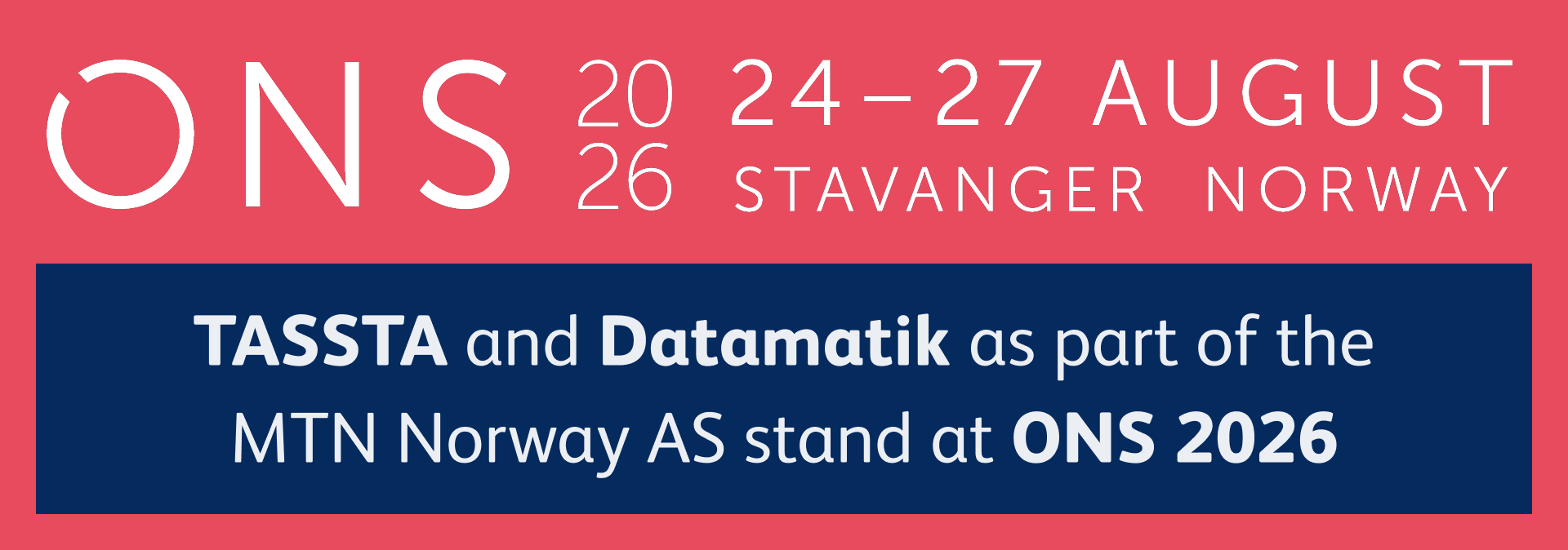
TASSTA and Datamatik at ONS 2026
TASSTA, together with Datamatik, will participate in ONS 2026 as part of the MTN Norway AS stand in Stavanger from 24 to 27 August.
Visit the MTN Norway AS stand to experience live demonstrations of TASSTA’s mission-critical communication solutions for the energy sector, including:
– TASSTA MCX Push-to-Talk (MCPTT) for instant and reliable voice communication
– Push-to-Video (MCVideo) for real-time visual information and improved situational awareness
– Indoor localization, Guard Tour and Lone Worker Protection for iPhone and Android, supporting precise positioning, digital patrol management and personnel safety
– Integration with TETRA, DMR, analog and other radio networks through TASSTA Bridge, connecting existing radio infrastructure with broadband communications.
From offshore operations and maintenance teams to emergency response and critical infrastructure, TASSTA helps keep personnel connected, informed and safe in demanding working environments.
ONS 2026, Stavanger
24 to 27 August
TASSTA and Datamatik, as part of the MTN Norway AS stand
TASSTA MCX Joins the Communications Backbone of the Dubai Metro Blue Line
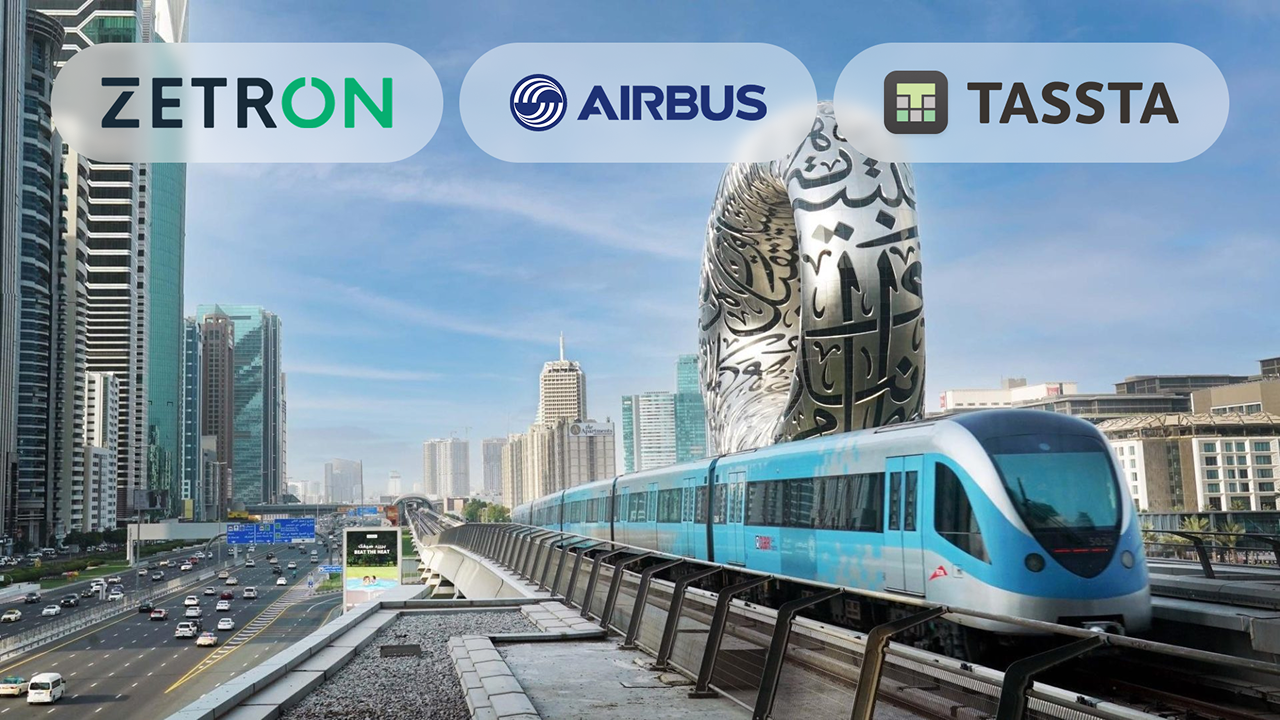
TASSTA MCX Joins the Communications Backbone of the Dubai Metro Blue Line
TASSTA Confirms MCX Interoperability at the 10th ETSI MCX Plugtests in Sophia Antipolis
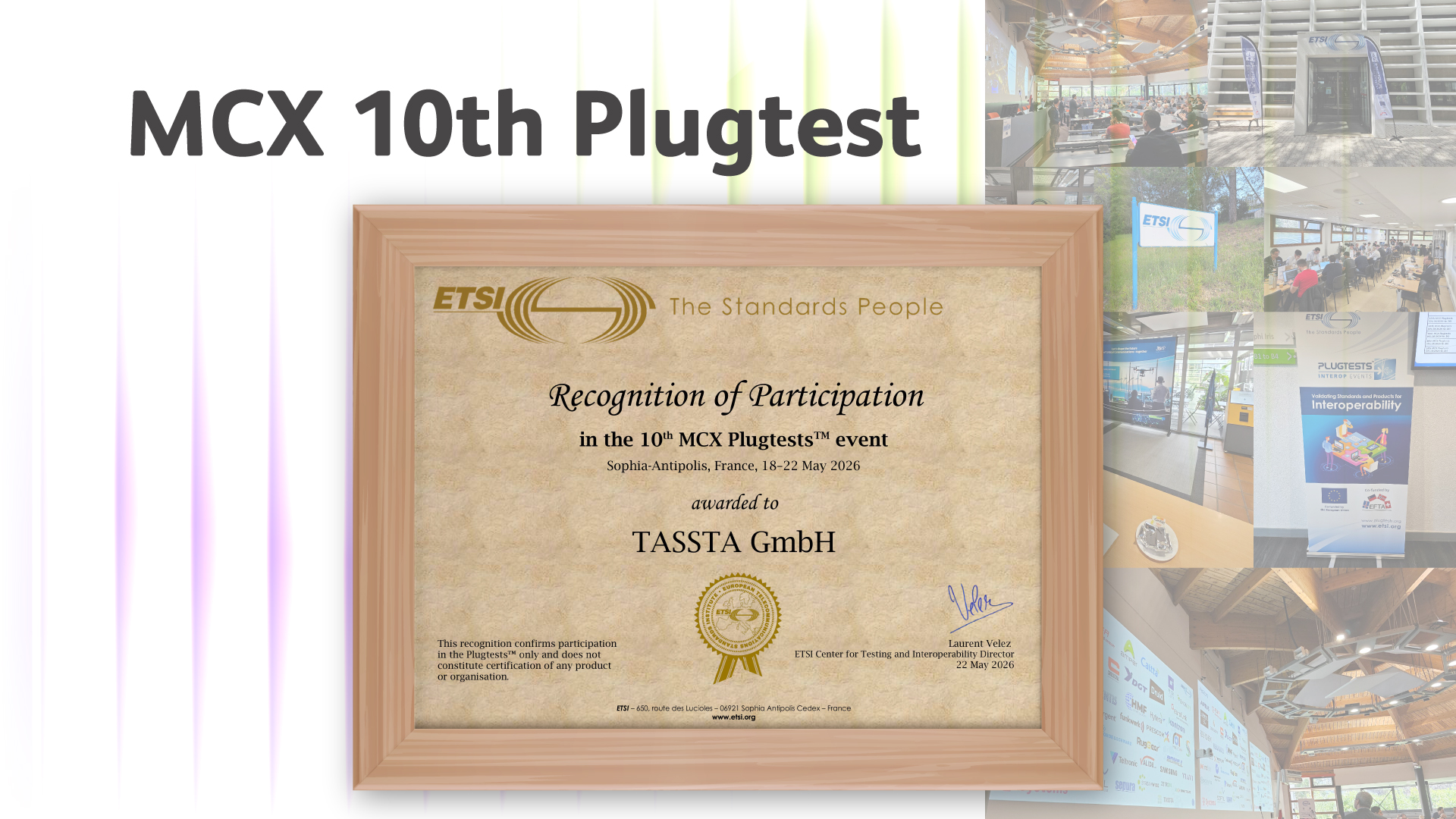
TASSTA Confirms MCX Interoperability at the 10th ETSI MCX Plugtests in Sophia Antipolis
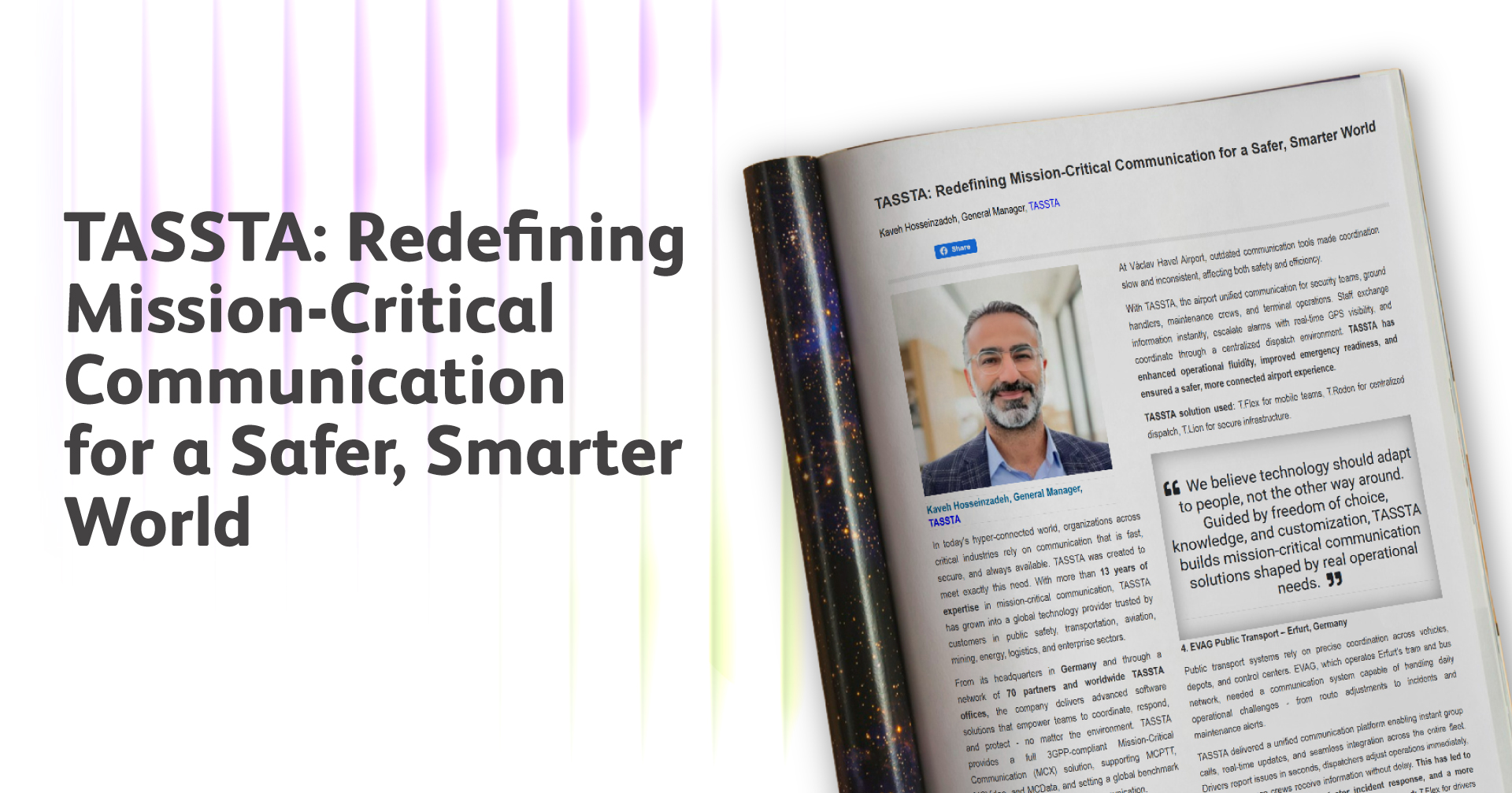
TASSTA Featured in APAC CIOOutlook for Redefining Mission-Critical Communication
TASSTA Featured in APAC CIOOutlook for Redefining Mission-Critical Communication
https://wireless.apacciooutlook.com/vp/TASSTA/tassta:_redefining_mission-critical_communication_for_a_safer,_smarter_world/
The feature explores how TASSTA addresses today’s communication challenges by delivering a software-defined platform that combines push-to-talk (PTT), real-time voice and video, location tracking, emergency management, and task coordination in a single, unified solution. Designed for environments where reliability is non-negotiable, TASSTA supports organizations operating in public safety, critical infrastructure, transportation, industry, and enterprise sectors.
The article highlights TASSTA’s seamless integration of traditional radio systems with advanced digital capabilities, supported by continuous development that adapts to evolving operational and industry demands. This approach allows organizations to modernize their communications while preserving existing investments and ensuring full interoperability across devices, networks, and technologies.
APAC CIOOutlook also emphasizes TASSTA’s focus on resilience, security, and flexibility. TASSTA solutions can be deployed on-premise or in hybrid environments, offering customers full control over data sovereignty and system availability. Built to support broadband networks, private LTE/5G, and radio interoperability, TASSTA enables a smooth transition toward next-generation mission-critical communications.
By prioritizing customization, freedom of choice, and knowledge sharing, TASSTA continues to help organizations enhance situational awareness, improve response times, and increase operational safety — without compromising reliability.
Interested to learn more, contact us at:
hello@tassta.com
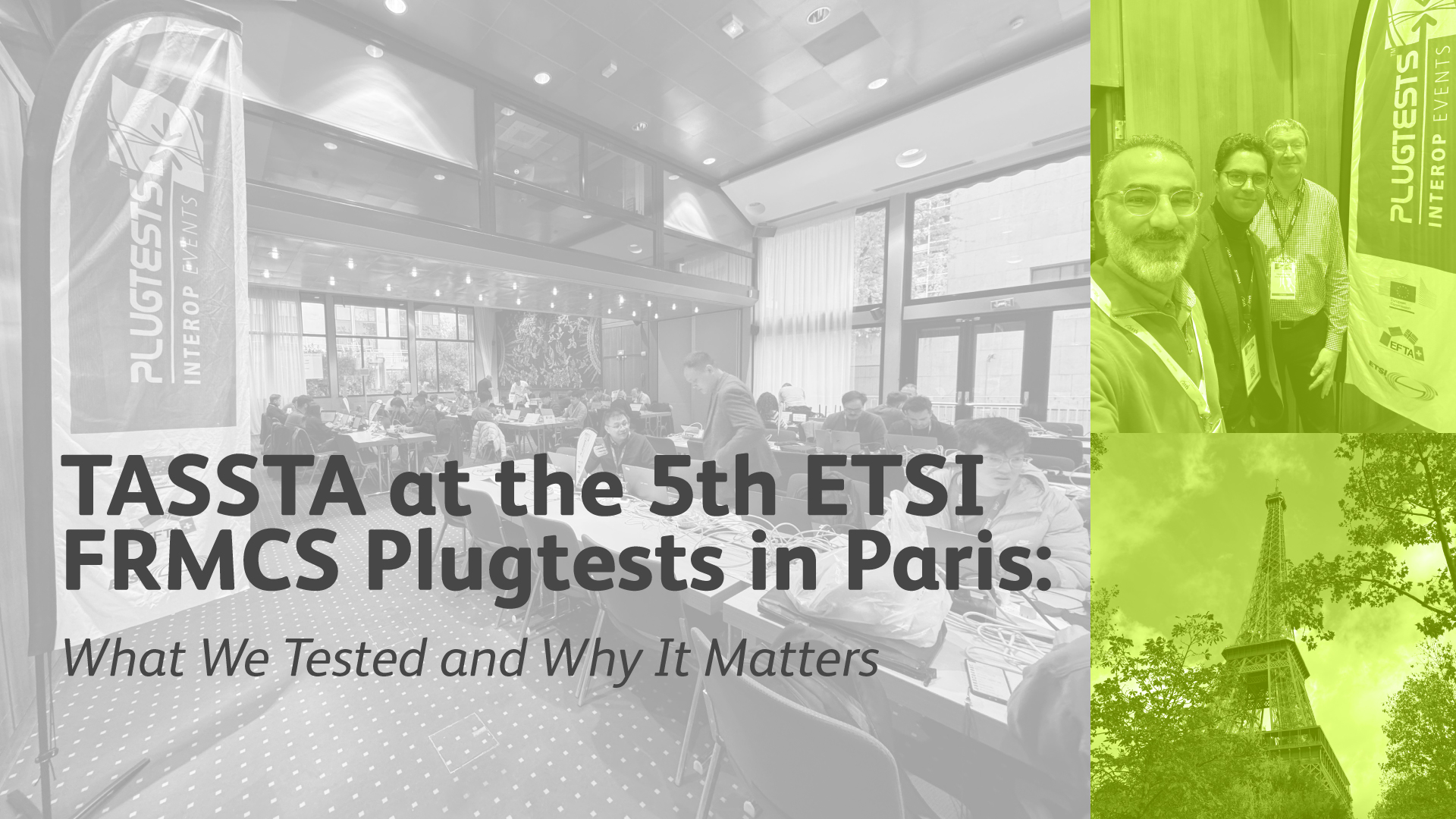
TASSTA at the 5th ETSI FRMCS Plugtests in Paris: What We Tested and Why It Matters
TASSTA at the 5th ETSI FRMCS Plugtests in Paris: What We Tested and Why It Matters
What is FRMCS and why Plugtests exist
FRMa Railway Mobile Communication System) is the railway industry’s next-generation communication system, intended to replace GSM-R with broadband, secure and interoperable services.
The Plugtests series is ETSI’s way to ensure that different vendors’ implementations actually work together in practice — not just on paper.
ETSI’s goals for the event:
– validate understanding of 3GPP/ETSI standards
– help implementers find and resolve issues early
The 5th edition brought together a large multi-vendor lab with more than 170 participants, simulating an environment close to real railway deployments.
TASSTA’s setup in the lab
– TASSTA T.XON MCX Application Server
– our MCX client(s)
This allowed us to integrate and test against multiple 5G cores from different vendors in a shared interoperability lab.
This is important because in live railway networks, MCX services must operate reliably across whichever 5G core an operator chooses. Demonstrating multi-vendor compatibility is therefore a key milestone for market readiness.
The test areas we executed
1. MCPTT Group Calling (on-demand / ad-hoc)
– Creating an ad-hoc MCPTT group call on demand, without security
[CONNMCPTT/ONN/GROUP/ADHOC/ONDEM/NOSEC/NFC/02] – Releasing that ad-hoc group call
[CONNMCPTT/ONN/GROUP/ADHOC/ONDEM/NOSEC/NFC/03]
In simple terms
We verified that a user can start a spontaneous push-to-talk group — for example, “all staff in this station right now” — and later end it cleanly. The group is created dynamically by the MCX system and correctly transported through the 5G core.
2. Floor Control (who is allowed to talk, when)
MCPTT is not like a normal voice call — only one person (or a controlled set of people) speaks at a time. The mechanism that manages this is Floor Control (FC).
Basic FC– Effect of priorities [FC/BASIC/02]
Advanced FC
– Revoking the floor when a timer expires (T2) [FC/ADV/01]
– Queueing requests after release [FC/ADV/02]
– Queueing requests after revoke [FC/ADV/03]
Awareness and special cases
– Functional Alias (FA) display during FC [FC/FA/BASIC/01]
FA allows users to speak under a role (e.g., “Train Driver 17”) instead of a personal name.
– Multi-talker basic operation [FC/MT/BASIC/01]
– Location sharing during FC [FC/LOC/BASIC/01]
– Location sharing during multi-talker FC [FC/MT/LOC/BASIC/01]
In simple terms
We validated that:
– the system correctly assigns the “right to speak”
– priority users override lower-priority requests
– the floor is revoked automatically if held too long
– queued talkers get their turn in order
– operators can immediately see who is speaking (via alias/role) and, when relevant, where they are — even in multi-talker situations
These are essential railway features, enabling dispatchers and field teams to maintain clear, disciplined voice communication in high-stress situations.
3. 5G QoS Integration (making mission-critical traffic “special” in the 5G core)
Mission-critical voice requires guaranteed quality (latency, priority, stability). In 5G, this is achieved via dedicated QoS flows.
We tested:– Creating a unicast 5GS QoS flow via Rx [PCC/5GSQOSFLOWSETUP/Rx/02]
– Creating a unicast 5GS QoS flow via N5 [PCC/5GSQOSFLOWSETUP/N5/02]
– Updating a unicast 5GS QoS flow via Rx [PCC/5GSQOSFLOWUPDATE/Rx/02]
In simple terms
We checked that the TASSTA MCX server can request mission-critical treatment from the 5G core — using standard 3GPP policy control interfaces — for specific users’ media streams.
This allows the network to prioritize MCPTT traffic over normal data traffic, which is a core requirement for FRMCS deployment.
What we gained from the Plugtests
– Multi-vendor realism — testing our stack against diverse 5G cores and MCX implementations in one environment
– Standards confirmation — verifying our implementation aligns with ETSI/3GPP intent
– Early issue discovery — solving interoperability problems in the lab, before they appear in real railway networks
Why this matters for the railway industry
1. vendors interoperate,
2. mission-critical QoS is correctly enforced in 5G cores,
3. railway-specific MCX behavior (roles, priorities, multi-talker logic, location) operates reliably.
This Plugtests edition showed the ecosystem moving from “specification compliance” to field-ready interoperability.
Thank you
TASSTA is proud to contribute to the maturity of FRMCS and MCX interoperability, and we will continue this work in upcoming ETSI/3GPP programmes.


